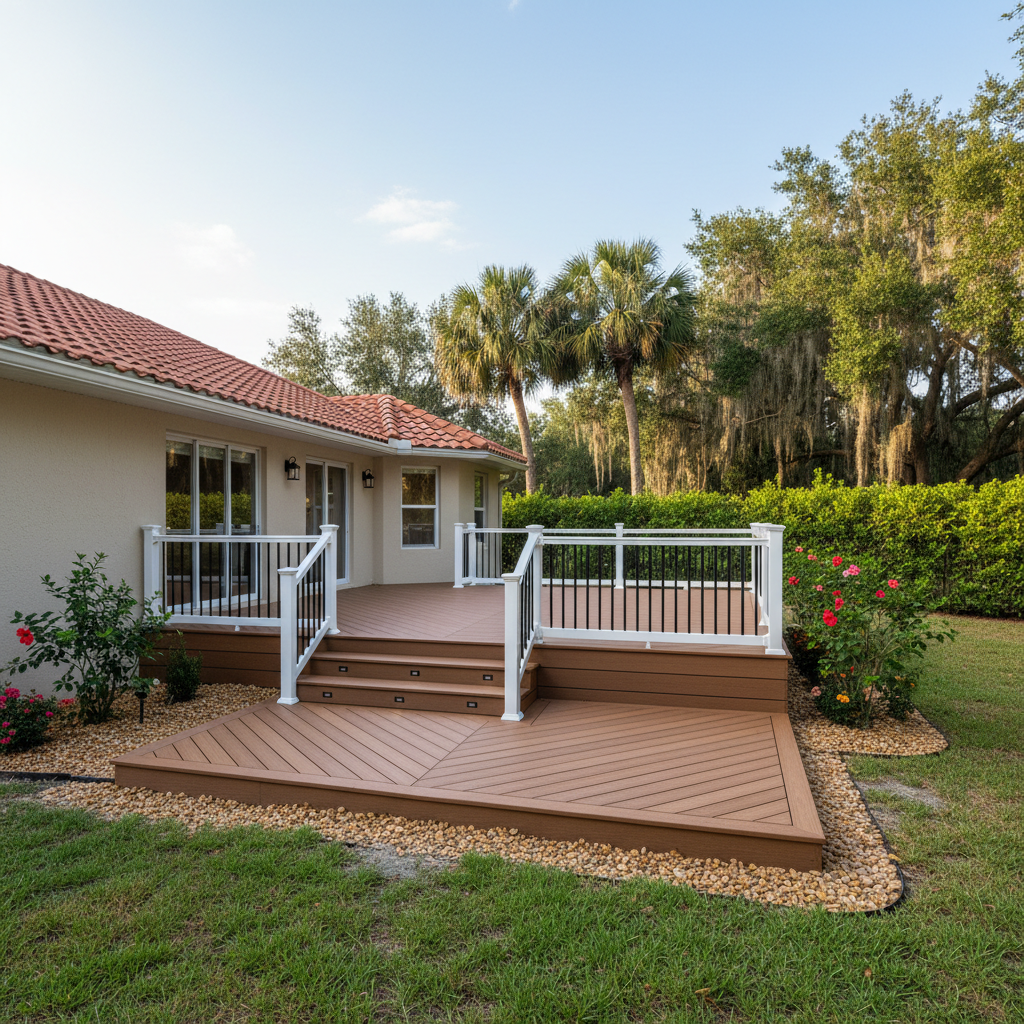
When's the best time to build a Trex deck here in St. Cloud? That's a question I get a lot, and it's a good one, especially with our wild Florida weather. It's not just about when it's comfortable for us to work, you know; it's also about what conditions are best for the materials and, of course, for you, the homeowner.
Scheduling Your Trex Deck Project in St. Cloud
You might think summer's the ideal time for a deck, right? Everyone's thinking about outdoor living. But here in St. Cloud, summer means daily afternoon thunderstorms, scorching heat, and humidity that just hangs in the air like a wet blanket. That can really slow down a project. We're talking about lost workdays due to rain, and let me tell you, working with tools and materials in 95-degree heat with 90% humidity isn't just uncomfortable — it can be downright dangerous and less efficient.
From my experience, the sweet spot for scheduling a new deck build is usually late fall through early spring. Think October, November, then February, March, April. The temperatures are milder then, the humidity drops, and we get a lot more consistent dry days. This means fewer delays, a smoother build process, and honestly, a happier crew. We can get the job done more efficiently, and you get to enjoy your new deck sooner without the stress of constant weather delays. Plus, if you plan it right, you can have your deck ready just in time for those beautiful spring evenings or even for holiday gatherings.
Weather Conditions That Affect Trex Deck Installation
While Trex composite decking itself is incredibly durable and resistant to our climate once installed, the installation process isn't immune to the elements. Here's what we're up against:
- Rain: Obvious, right? We can't be cutting and fastening boards in a downpour. It's a safety hazard, and it just makes everything messy and difficult. Even a light drizzle can make surfaces slick.
- Extreme Heat: Working with tools, moving heavy materials, and being out in direct sun all day takes a toll. We pace ourselves, sure, but efficiency drops. Plus, some adhesives or sealants we might use for certain components have temperature limits for proper curing.
- Humidity: This is a big one for the substructure. While Trex boards don't expand and contract like wood, the pressure-treated lumber underneath them does. High humidity can cause wood to swell, and then as it dries, it shrinks. We account for this in our build practices, but consistent, stable weather is always better.
- Wind: Strong winds, especially during hurricane season, can be a real problem. We can't have large sections of framing up if there's a risk of them becoming airborne. Safety first, always.
We're pros at working around these challenges, but knowing when conditions are generally more favorable helps everyone.
Protecting Your Trex Deck Investment Year-Round
You picked Trex for its low maintenance, and that's smart, especially here in St. Cloud where everything seems to want to grow or corrode. But ---