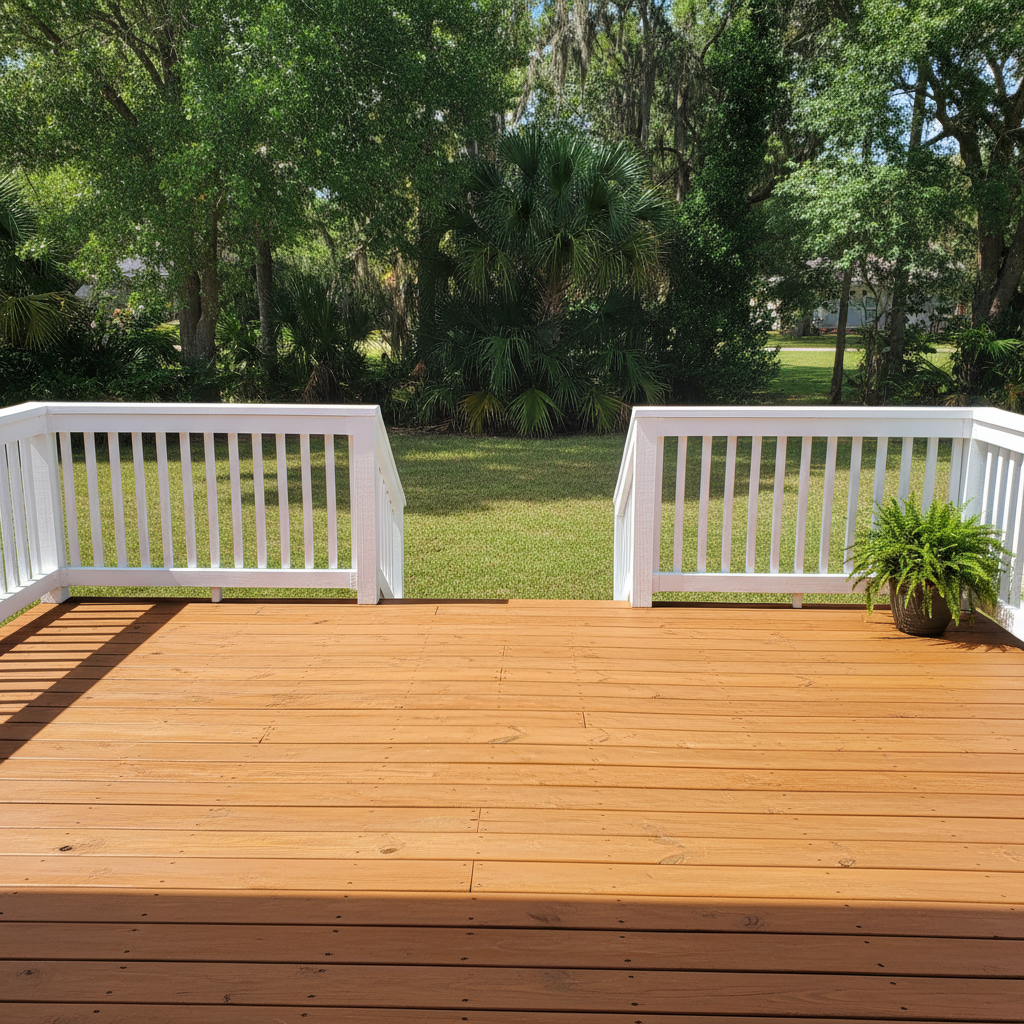
Keeping Your Deck Repairs Solid: Long-Term Care in St. Cloud
So, you've just had some deck repairs done, maybe by us at Omega Deck Co., or another local outfit. That's a good start. But here in St. Cloud, with our sun beating down and the humidity always trying to sneak in, a repair isn't a 'set it and forget it' kind of deal. You've put money into getting your deck back in shape, right? Now, let's make sure those fixes actually last. You want to get the most out of that work, don't you?
Making any deck repair last longer — whether it's just a few boards or a whole section — really comes down to knowing what our Florida climate does to wood and fasteners. It's not just about the repair itself; you also need to protect the whole structure. For instance, if we replaced some rotten joists under your deck, making sure water drains away from that area is super important. Our heavy summer downpours, especially in neighborhoods like Narcoossee where some homes sit a bit lower, can really test any drainage. You've got to keep an eye on your gutters and make sure they're not dumping water right next to your deck's foundation.
Your Regular Deck Maintenance Checklist for Florida Homes
Regular maintenance isn't just about making your deck look good; it's about stopping small issues from turning into big, expensive problems. Here's what I tell folks:
- Clean it regularly: I'm talking about more than just sweeping. Grab a good deck cleaner and a stiff brush a couple of times a year. Our humidity encourages mold and mildew growth like crazy. If you let that sit, it holds moisture against the wood, which is a recipe for rot, even on pressure-treated stuff.
- Check your fasteners: Screws and nails can back out over time. This happens especially with the expansion and contraction wood goes through thanks to our temperature swings. Walk your deck, feel for loose boards, and tighten or replace any fasteners that aren't holding tight.
- Inspect your finish: If your deck is stained or sealed, that finish is its first line of defense. Look for peeling, fading, or worn spots. If you see them, it's time to clean and reapply. Don't wait until the wood is exposed and graying.
- Clear debris: Leaves, pine needles, dirt – anything that collects on your deck or between boards holds moisture. Get it off there. Pay special attention to areas under planters or doormats, too.
- Trim back vegetation: Keep bushes and trees from growing too close to or over your deck. They block airflow, keep the deck from drying out, and can drop debris.
Warning Signs: Don't Ignore These Deck Problems
Your deck usually gives you hints when something's wrong. You just need to know what to look for. Catching these early can save you a lot of headache and money:
- Soft spots or spongy areas: If you walk across your deck and feel a board give more than it should, or if it feels soft when you poke it with a screwdriver, that's a big red flag for rot.
- Cracked or splintered wood: A few small cracks are normal, but large, deep cracks or widespread splintering mean the wood is drying out and deteriorating. This can also be a safety hazard, obviously.
- Loose railings or wobbly stairs: This is a major safety concern. If your railing isn't solid when you lean on it, or if your stairs feel unstable, get it checked out immediately.
- Discoloration or dark spots: Beyond surface mildew, dark, deeply stained areas often point to prolonged moisture exposure and potential rot underneath.
- Rusting fasteners or hardware: If you see rust streaks or if the heads of screws are corroding, it means moisture is getting in, and the fasteners themselves are weakening.
- Pest activity: Termites love damp wood. If you see mud tubes, sawdust-like droppings (frass), or actual bugs, you've got a bigger problem than just deck repair.
When to Call a Professional Deck Contractor
Look, some things you can handle yourself. Tightening a few screws or giving the deck a good scrub? Go for it. But there are times when you really need to bring in a pro. Here's when I say pick up the phone:
- Structural concerns: Any sign of rot in support posts, joists, or ledger boards. These are the bones of your deck, and if they're compromised, the whole thing could be unsafe.
- Widespread damage: If you've got multiple soft spots, widespread wood deterioration, or significant issues with more than just a few surface boards, it's a bigger job than a DIY patch.
- Railing or stair instability: Like I said, safety first. If you can't confidently fix a wobbly railing or stair, don't mess around.
- Pest damage: If you suspect termites or other wood-boring insects, you'll need pest control first, and then a professional deck contractor to assess and repair the damage.
- Water drainage issues: If you're constantly battling standing water under or on your deck, and you can't figure out a solution, a pro can help identify the cause and implement proper drainage.
- You're just not comfortable: If you're unsure about the extent of the damage, or if you don't have the right tools or experience, it's always better to call in someone who does. We've seen plenty of well-intentioned DIY fixes that ended up costing more in the long run.
Your deck is an extension of your home, and with a little attention, it'll serve you well for years to come. Don't let our St. Cloud weather get the best of it. Keep an eye on things, do your regular maintenance, and if you see something that makes you scratch your head, give Omega Deck Co. a call. We're always happy to take a look.