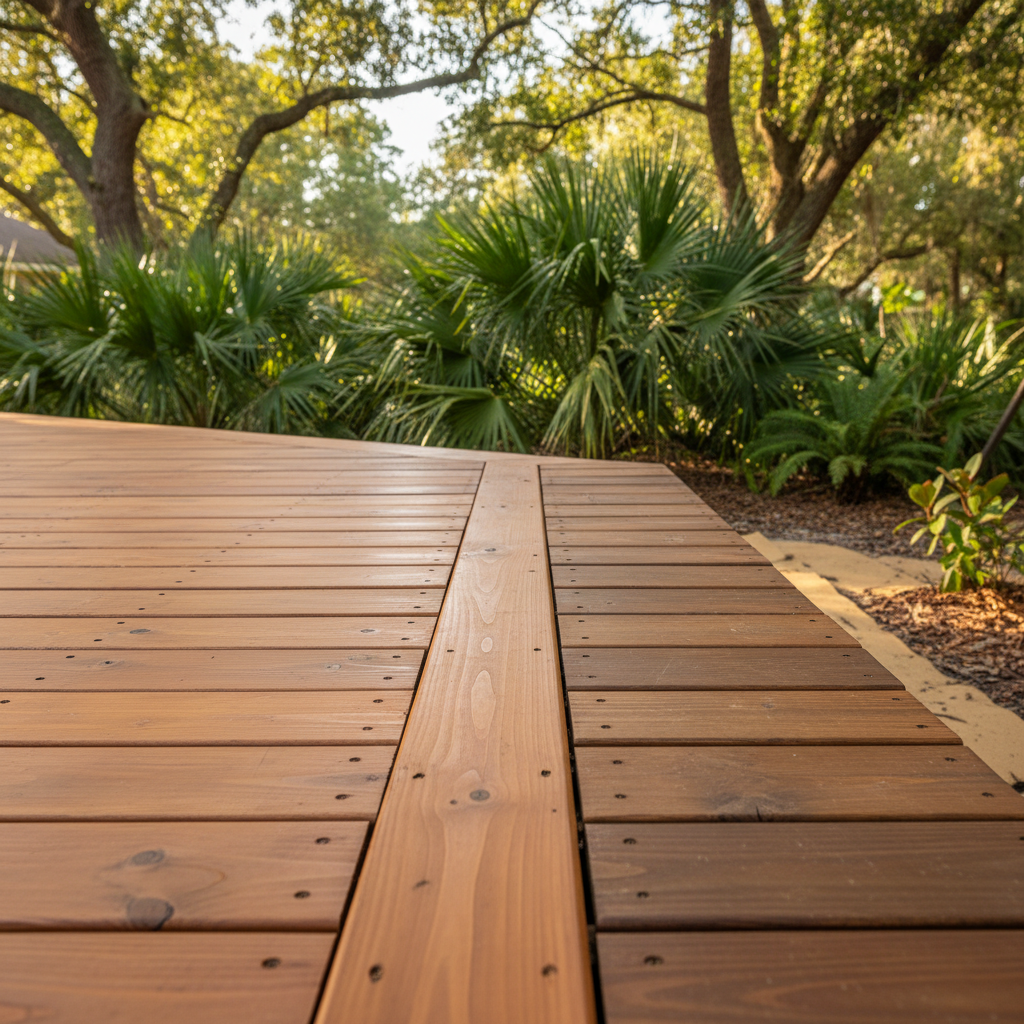
Alright, let's talk about deck repairs. I get a lot of calls from homeowners around St. Cloud, and while every deck's a bit different, the questions I hear tend to be pretty similar. People want to know what's going on, what it'll cost, and if it's even worth fixing. So, I figured I'd lay out some straight answers to the most common questions I get. No marketing speak, just what I've seen out there.
What are the most common deck repair issues you see in St. Cloud?
Honestly, it's usually a combination of things, all thanks to our lovely Florida weather. The sun, the humidity, and those afternoon downpours really take a toll. Here's what I'm constantly running into:
- Rot and Fungal Growth: This is a big one, especially on older pressure-treated pine decks or anywhere water sits. Think joists, ledger boards where they meet the house, or even deck boards that stay wet too long. Our humidity here in St. Cloud, particularly near areas like East Lake Tohopekaliga, just loves to encourage it.
- Loose or Popped Fasteners: Screws and nails can work their way out over time. The wood expands and contracts with temperature changes, and eventually, those fasteners just can't hold on like they used to. This leads to wobbly railings, loose boards, and sometimes even tripping hazards.
- Splitting, Cracking, and Warping Boards: The sun's UV rays are brutal. They dry out the wood, causing it to split and crack. Then, when it rains, the wood soaks up moisture, swells, and can warp or cup. It's a constant battle, really.
- Failing Railings and Stairs: Safety is huge. Railings get loose, balusters break, and stair treads can rot or become unstable. These areas see a lot of foot traffic and stress, so they often show wear first.
- Substructure Problems: Sometimes, the issues go deeper than just the surface. Posts can rot at ground level, or joists might sag. This is less common for newer decks built to code, but older decks can definitely have these kinds of structural problems.
How do I know if my deck needs a repair or a full replacement?
This is the million-dollar question, right? It really comes down to how much damage there is and, frankly, your budget. If it's just a few loose boards, a wobbly railing section, or some surface rot on a couple of planks, that's usually a repair job. We can swap out those specific pieces, reinforce connections, and get you back in good shape.
But if you're looking at widespread rot in the main support beams, the ledger board, or most of your deck boards are spongy and soft, then you're probably looking at a replacement. If the foundation posts are compromised, or the entire structure feels unstable when you walk on it, don't mess around – that's a replacement. It's about safety first. I'll always give you an honest assessment. Sometimes, trying to patch up a failing deck is just throwing good money after bad.
Can I just fix it myself, or should I hire a pro?
Look, for small stuff, absolutely, go for it if you're handy. Replacing a single split deck board, tightening a few screws, or even staining your deck are things many homeowners can tackle. You'll save some money and get that satisfaction of doing it yourself.
However, when you start getting into structural issues – like replacing a rotted joist, repairing a ledger board, or dealing with an unstable railing system – that's when you really should call in a pro. There are specific building codes, especially for things like railing height and baluster spacing, that need to be met for safety. Plus, knowing how to properly cut, fasten, and support structural elements takes experience. You don't want to compromise the safety of your family or guests because of an improper repair. At Omega Deck Co, we've seen enough DIY fixes that ended up costing more to fix properly than if a pro had done it right the first time.
What's the typical cost for deck repairs in St. Cloud?
That's like asking how much a car costs – it totally depends! But I can give you a general idea. Small repairs, like replacing a few deck boards or fixing a wobbly railing section, might run you a few hundred dollars. If we're talking about more extensive work, like replacing several joists, a larger section of decking, or rebuilding a set of stairs, you could be looking at anywhere from a thousand to several thousand dollars. The materials you choose also play a big role. Pressure-treated pine is generally less expensive than composite decking for replacements, for example.
The best way to get an accurate cost is to have someone come out and take a look. We'll assess the damage, talk about your options, and give you a clear estimate. No surprises.
How long do deck repairs usually take?
Again, it varies. A small repair could be done in a few hours or a single day. If we're replacing a significant portion of the decking, a whole railing system, or doing some serious structural work, it might take a few days to a week. We always try to work efficiently and minimize disruption to your home life. We'll give you a timeline with your estimate, so you know what to expect.
What can I do to prevent future deck repair issues?
Good question! Prevention is always cheaper than repair. Here's what I recommend to folks around here:
- Clean Regularly: Sweep off debris, leaves, and dirt. Use a deck cleaner and a soft brush to remove mildew and grime at least once a year. This prevents moisture from getting trapped and encouraging rot.
- Inspect Annually: Take a walk around your deck once a year. Look for loose fasteners, soft spots, cracks, and any signs of rot. Pay close attention to the areas where the deck meets the house, and where posts meet the ground.
- Keep it Dry: Make sure water drains off your deck properly. Clear out any gutters above the deck. Trim back bushes or plants that keep parts of the deck perpetually shaded and damp.
- Seal or Stain: If you have a wood deck, apply a good quality water repellent sealer or stain every 2-3 years. This protects the wood from UV damage and moisture absorption, which are the main culprits for splitting and warping.
- Address Problems Early: Don't ignore a loose board or a small patch of mildew. The sooner you address a minor issue, the less likely it is to turn into a major, expensive repair.
Hopefully, this gives you a clearer picture of what to expect when it comes to deck repairs here in St. Cloud. If you've got a specific problem or just want an expert eye on your deck, don't hesitate to give us a call. We're here to help keep your outdoor space safe and enjoyable.