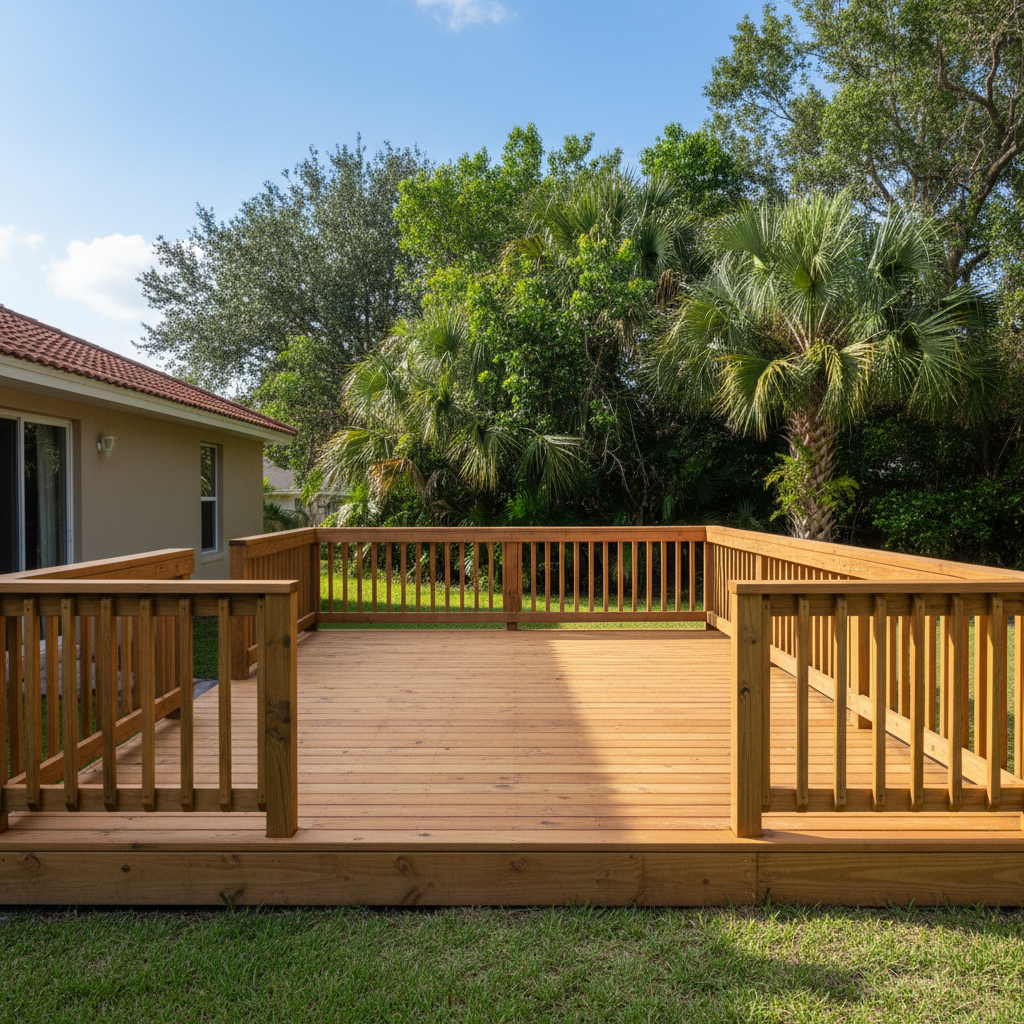
Alright, let's talk about your deck. You put good money into it, whether it's for those backyard barbecues, relaxing by the pool, or just having an extra spot to hang out. But here in St. Cloud, with our sun, humidity, and those afternoon downpours, a deck isn't something you can just build and forget. If you want it to last, you've got to give it a little love. I've seen too many decks around Narcoossee and other parts of town that just get neglected, and it’s a shame when a little maintenance could've saved a lot of headaches and cash.
Making Your Deck Last Longer in Florida
The biggest thing you can do to get more years out of your deck is protect it from our unique Florida elements. We're talking about relentless sun, heavy rains, and that constant humidity. It's a recipe for rot, mildew, and fading if you're not careful.
- Seal or Stain Regularly: For wood decks, this is a must. You're looking at every 1-3 years, depending on the product and how much sun your deck gets. A good quality sealer or stain acts like sunscreen for your wood, blocking UV rays and repelling water. It's not just about looks; it stops the wood from drying out, cracking, and becoming a sponge for moisture.
- Keep it Clean: Sounds simple, right? But debris, leaves, and dirt can trap moisture against the deck surface, leading to mildew and rot. Sweep it off regularly, especially after a storm.
- Manage Moisture: This is huge. Make sure water drains away from your deck, not under it or pooling on it. Check your gutters to ensure they're not dumping water directly onto or next to your deck. If you've got planters on the deck, use saucers to catch overflow.
- Trim Back Vegetation: Trees and shrubs growing too close to your deck can keep it shaded and damp, which is prime real estate for mold and mildew. Keep them trimmed back to allow for good airflow and sunlight to dry the deck out.
What Regular Maintenance Looks Like (It's Not That Bad)
You don't need to dedicate your life to deck maintenance, but a little routine goes a long way. Think of it like changing the oil in your car.
- Monthly Quick Check: Just walk around your deck. Look for anything obvious. Are there loose boards? Any nails popping up? Is there a weird green or black growth starting anywhere? Catching these things early saves you a bigger repair later.
- Quarterly Cleaning: Give your deck a good scrub. For most decks, a soft-bristle brush and a mild soap (like dish soap) mixed with water will do the trick. For tougher grime or mildew, a deck cleaner designed for your deck material works better. You can use a pressure washer, but be careful! Too much pressure, especially on wood, can damage the fibers and leave marks. Start with a low setting and keep the wand moving.
- Annual Inspection: This is when you get a bit more thorough. Check all the railings for stability. Look at the ledger board where the deck attaches to your house – that's a critical connection. Inspect the posts and joists underneath for any signs of rot or insect damage. If you have a wood deck, this is also when you'd figure out if it's time for another coat of sealer or stain.
Warning Signs of Trouble
Your deck will usually tell you when something's wrong, if you know what to look for. Don't ignore these signals:
- Soft Spots or Spongy Areas: If a board feels soft or bouncy when you step on it, that's a red flag for rot. Don't wait on this; it can be a safety hazard.
- Cracked or Splintered Boards: Small cracks are normal with wood, but large, deep cracks or widespread splintering means the wood is drying out and deteriorating.
- Loose Railings or Posts: Grab a railing and give it a good shake. If it wiggles more than a little, it needs attention. Loose connections are dangerous.
- Too Much Mildew or Algae: A little green here and there is common, but if your deck is constantly covered in a thick layer of green or black growth, it's holding too much moisture and could be rotting underneath.
- Fastener Issues: Nails popping up, screws backing out, or rusted hardware are all signs of wear and tear or improper installation.
- Sagging or Uneven Decking: If parts of your deck are noticeably lower than others, or the whole thing looks like it's sagging, you've got a structural problem.
When to Call a Professional (Like Omega Deck Co.)
Look, I'm all for homeowners tackling DIY projects, but there are times when you really need to bring in someone with experience. Don't mess around when safety is on the line.
- Structural Concerns: If you see sagging, major rot in support posts or joists, or issues with the ledger board, call us. These aren't cosmetic fixes; they're about the integrity and safety of your entire deck.
- Widespread Rot or Insect Damage: A single rotten board you can probably handle. But if rot is spreading, or you suspect termites or other wood-boring insects, a pro can assess the damage and recommend the right course of action.
- Major Repairs or Replacements: If you're looking at replacing a significant section of your deck, or if you're not comfortable working with power tools or at heights, it's better to let us handle it. We've got the tools, the know-how, and the insurance.
- You're Unsure: If you're looking at something and just don't know if it's a big deal or not, it's always better to get a professional opinion. A quick inspection can give you peace of mind or prevent a small problem from becoming a huge, expensive one.
Your deck is an extension of your home and a big investment. A little proactive maintenance goes a long way in keeping it safe, beautiful, and functional for years to come. Don't let our St. Cloud weather get the best of it!