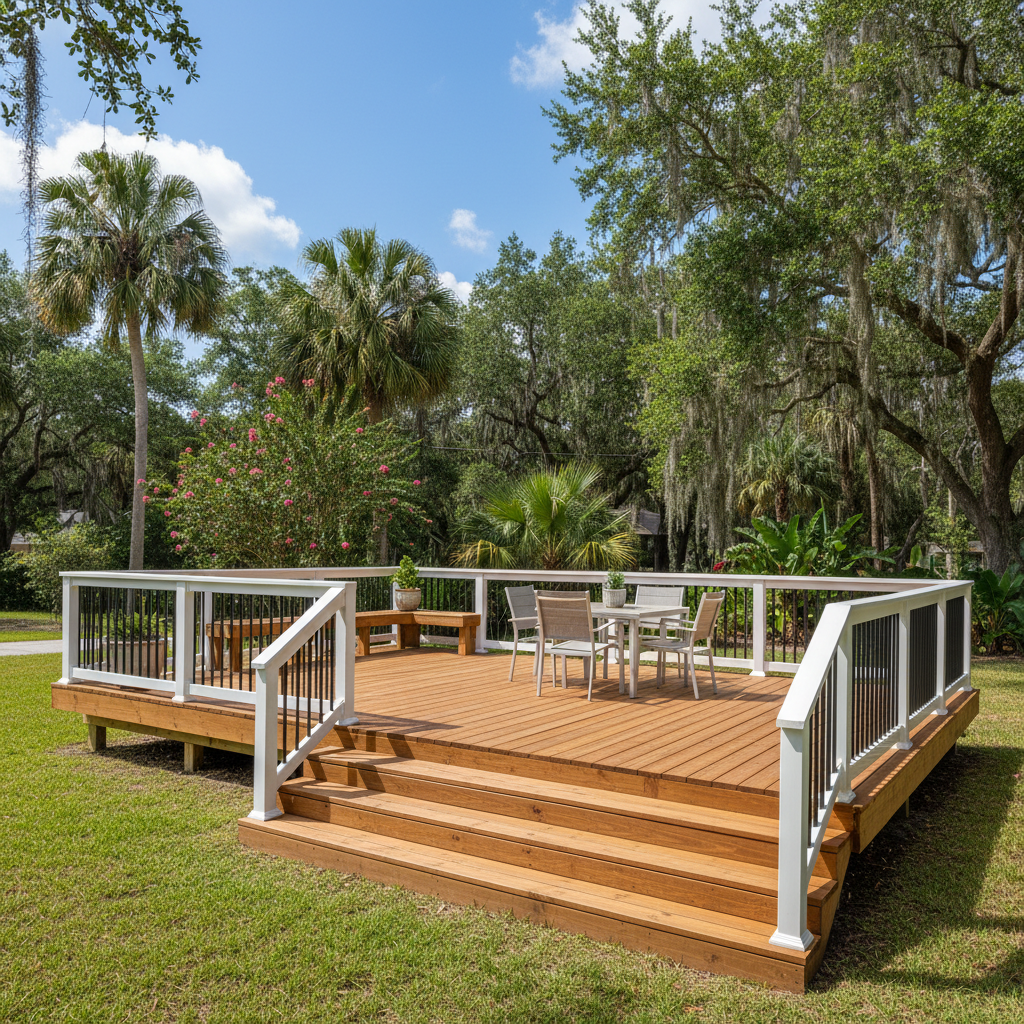
Ever wonder why your beautiful wooden deck seems to age faster here in St. Cloud than it might up north? It's not just your imagination. Our Florida climate, with its relentless sun, high humidity, and sudden downpours, is a real workout for any outdoor structure, especially decks.
Understanding St. Cloud's Climate Impact on Decks
I've been building and maintaining decks around here for years, and I've seen firsthand what our weather does. That intense UV radiation from the sun doesn't just fade your deck; it breaks down the wood fibers. Then you've got the humidity, which is pretty much a constant companion from May to October. That moisture gets into the wood, causing it to swell. When the sun bakes it dry, it shrinks. This constant expansion and contraction is brutal on fasteners and can lead to warping, cracking, and splintering.
And let's not forget the rain. We get some serious afternoon thunderstorms, sometimes daily during the summer. All that water, combined with the heat, creates a perfect breeding ground for mold and mildew. If you've got a deck that's mostly shaded, or if it's built low to the ground without much airflow, you're going to see it even more. I've worked on decks in Narcoossee where the shade from mature oaks was great for comfort, but terrible for deck drying.
When to Schedule Deck Work: Timing is Everything
So, when's the best time to tackle deck projects like staining, sealing, or even building a new one? It really comes down to avoiding the worst of the heat and humidity, and those daily summer rains.
Fall (October - December): This is probably my favorite time for deck work. The humidity starts to drop, the temperatures are much more comfortable, and those afternoon showers become less frequent. The wood has a chance to dry out thoroughly before you apply a finish, which is crucial for good adhesion and longevity.
Spring (March - May): Early spring can be good too, before the really intense heat and humidity kick in. You'll want to keep an eye on the forecast for pop-up showers, but generally, you get some good stretches of dry, warm weather perfect for outdoor projects.
Winter (January - February): Believe it or not, our mild winters offer some great days for deck maintenance. Just be mindful of cooler temperatures affecting drying times for stains and sealers. You want to make sure the product can cure properly.
What you want to avoid is trying to stain or seal your deck in the middle of July. The product will dry too fast on the surface, not allowing it to penetrate properly, and you'll likely trap moisture underneath, leading to peeling and a shorter lifespan for your finish.
Protecting Your Deck Investment Year-Round
Keeping your deck in top shape isn't a one-and-done deal; it's an ongoing effort, especially here in St. Cloud. Here's what I recommend to my clients:
Regular Cleaning: Don't underestimate the power of a good cleaning. At least once a year, usually in the spring or fall, give your deck a thorough wash. Use a deck cleaner specifically designed to kill mold and mildew. A pressure washer can be great, but use it carefully on a low setting; too much pressure can damage the wood fibers.
Stain and Seal Regularly: This is your deck's sunscreen and rain jacket. A good quality stain and sealer will protect the wood from UV damage and moisture intrusion. How often? It depends on the product and how much sun your deck gets, but typically every 2-3 years for transparent or semi-transparent finishes, and maybe 3-5 years for solid stains. Keep an eye out for signs of wear – water not beading up anymore is a clear indicator it's time.
Check for Loose Fasteners: With all that expansion and contraction, screws and nails can work their way loose. Periodically walk your deck and tighten any screws or hammer down any nails that are popping up. This prevents tripping hazards and keeps your deck structurally sound.
Trim Back Vegetation: Make sure trees, bushes, and other plants aren't constantly touching your deck. This helps with airflow, reduces moisture buildup, and keeps leaves and debris from accumulating, which can trap moisture and promote rot.
Consider a Quality Build: If you're building a new deck or replacing an old one, think about the materials and construction methods. Using pressure-treated lumber rated for ground contact, even for above-ground components, can add an extra layer of protection. And proper spacing between deck boards is crucial for drainage and airflow – something we always pay close attention to at Omega Deck Co.
Taking a little time each year to maintain your deck will save you a lot of headaches and money down the road. It's an investment in your home and your outdoor living space, and it deserves that care, especially with our unique Florida weather.