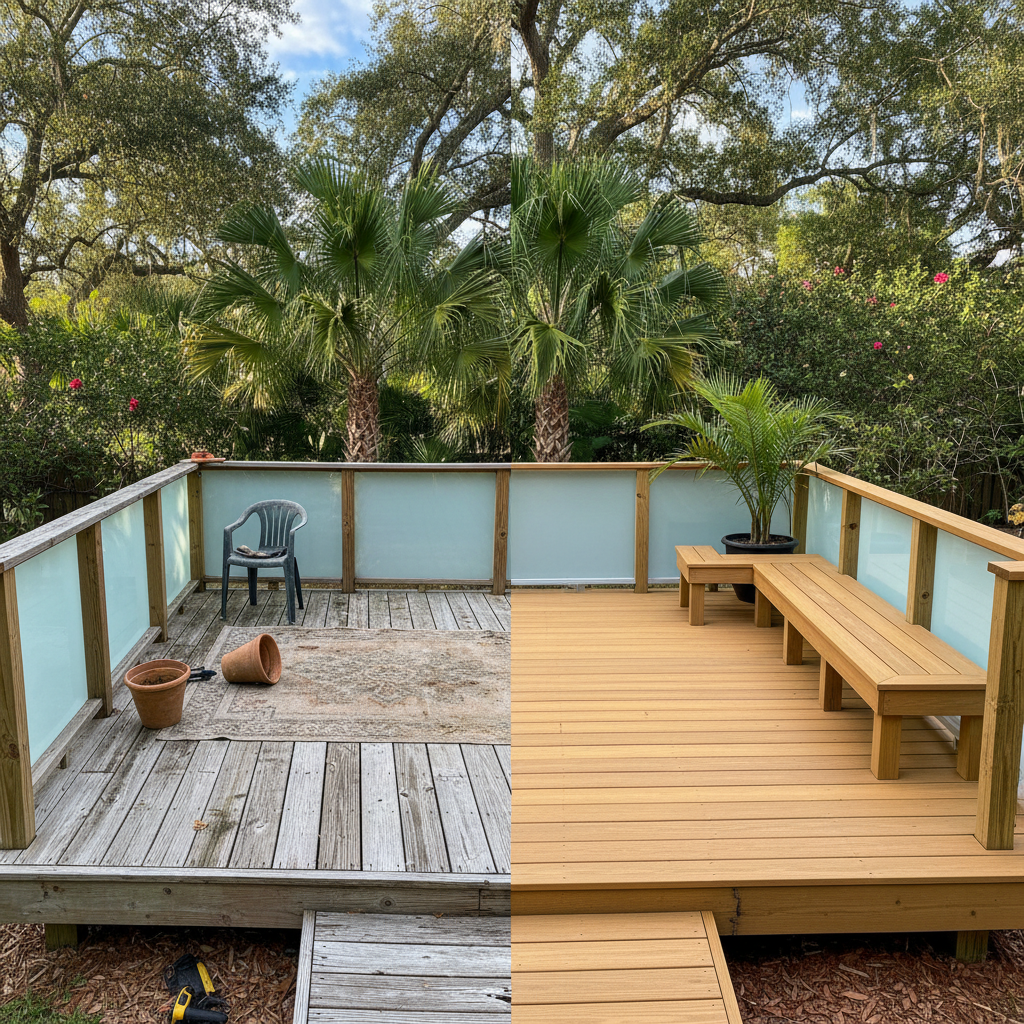
Alright, let's talk decks. You're probably looking to add some outdoor living space to your St. Cloud home, right? One of the first big decisions you'll bump into is what material to build it with. For most folks, it boils down to two main choices: good old pressure-treated pine or a modern composite material. Now, I've built plenty of both around here, from Narcoossee to Canoe Creek, and honestly, each has its place. But for Florida living, one usually pulls ahead, in my opinion.
Cost: What's the Initial Hit?
Let's not beat around the bush; cost is a major factor for everyone. Generally speaking, pressure-treated pine is going to be your most budget-friendly option upfront. You'll pay less for the materials themselves, and it's often a bit quicker to install, which can save you a little on labor too. It's a classic for a reason – you get a solid deck without breaking the bank right out of the gate.
Composite decking, on the other hand, has a higher initial price tag. The material costs more per linear foot, and sometimes the installation can be a touch more involved, especially with those hidden fastener systems. So, if you're purely looking at the numbers on day one, pine wins this round hands down.
Durability: Standing Up to Florida Life
This is where the Florida climate really starts to show its teeth, wouldn't you say? Pressure-treated pine is treated to resist rot, decay, and insect infestation – and that's crucial here with our humidity and termites. It's tough, it's strong, and it can certainly last for a long time if you maintain it properly. However, wood is still wood. It's going to expand and contract with our crazy temperature swings and humidity levels. You'll see some checking, splitting, and warping over the years. It's just what wood does.
Composite decking is engineered for durability. It's made from a blend of wood fibers and recycled plastics, which makes it incredibly resistant to moisture, insects, and UV rays. You won't get rot, splinters, or termite damage. It holds its shape much better than wood, meaning less warping and cracking. For a place like St. Cloud, where we get intense sun, heavy rain, and high humidity for months on end, composite really shines here. It just shrugs off the elements, plain and simple.
Maintenance: Your Weekend Chores
This is probably the biggest difference and where many homeowners make their decision. A pressure-treated pine deck needs regular attention if you want it to look good and last. I'm talking about cleaning it annually, and then staining or sealing it every 1-3 years, depending on the product and how much sun it gets. If you skip this, your deck will gray out, splinter, and start showing its age pretty quickly. It's a commitment of time and money over the deck's lifespan.
Composite decking is a dream when it comes to maintenance. You basically just need to clean it periodically with soap and water to remove dirt, pollen, or any mildew that might pop up. No staining, no sealing, no sanding. That's it. Think about all the weekends you'll get back, not having to prep and seal your deck in the Florida heat. For busy folks, or anyone who just wants to enjoy their deck instead of working on it, composite is a clear winner.
Appearance: The Look and Feel
Pine has that classic, natural wood look that many people love. You can stain it in various colors to match your home, or let it weather to a natural silver-gray. There's an authenticity to real wood that's hard to replicate. However, as I mentioned, it will show wear and tear, and those natural imperfections are part of its charm – or its downfall, depending on your perspective.
Composite decking has come a long, long way in terms of appearance. Early composites looked a bit plastic-y, but today's options are incredibly realistic. They mimic the grain patterns and colors of natural wood, and often come in a wider range of consistent colors. You can get deep browns, grays, and even multi-tonal boards that look fantastic. Plus, the color stays consistent without fading, and you don't have to worry about splinters, which is a big deal if you've got kids or pets running around barefoot.
My Recommendation for St. Cloud Homeowners
Look, if your budget is super tight and you don't mind putting in the work every couple of years, a pressure-treated pine deck is a perfectly fine option. It'll give you a great outdoor space for a lower initial investment.
But for most homeowners in St. Cloud, Florida, I'm going to lean towards composite decking. Yes, the upfront cost is higher. I get it. But when you factor in the almost zero maintenance, the incredible durability against our harsh climate, and how good it looks year after year without you lifting a finger (besides a quick wash), it's usually the better long-term investment. You'll save money on stains, sealers, and your own time. Plus, you won't have to worry about the constant battle against the elements that real wood faces here.
It's about enjoying your deck, not maintaining it. And for that, composite materials usually come out on top for Florida living. If you're still weighing your options or want to talk specifics for your property, give Omega Deck Co a call. We've built enough decks around here to know what holds up and what doesn't.